


The Love Summit · convened since 2015
A ten-year inquiry into love as a practical force in how we lead, hold power, and build what lasts.
What progress leaves unsolved
We're living through a period of remarkable technical progress and deepening human strain. Trust in institutions is falling. Loneliness is rising. Artificial intelligence is changing how we work, decide, and relate faster than our judgment can keep pace.
The hardest of these problems aren't technical. They're relational. They come down to how we treat one another, what we believe people are worth, and how we use the power we happen to hold. Those questions are older than any of our tools, and we've built almost nothing to meet them at the speed we've built everything else. That gap is what this work is for.
What we mean by love
When we say love, we don't mean sentiment. It's often gentle, and sometimes gentleness is exactly what a moment requires. But it isn't only gentle. We mean something more demanding as well: taking people seriously, telling the truth, and using power in ways you'd be willing to defend.
Love shows up in ordinary decisions. How success gets defined. Who's in the room. What gets rewarded. Who gets protected when something goes wrong. None of this is only public, either. Whatever someone hasn't reckoned with privately tends to surface in the decisions they make under pressure, though rarely under its own name.
It also means being honest about what we are building toward. Much of this work returns to a single question: what we count as success, and what we are willing to call prosperity. A company, or a country, can grow its numbers while hollowing out the people and the places that made the growth possible. Love, held as a standard, keeps asking what the success is for.
The inner and the institutional aren't separate projects. They're the same one, approached from two directions.
A decade of this conversation
This inquiry isn't new. The Love Summit first convened in 2015 at Wieden+Kennedy in Portland, and again in 2017 at LPK in Cincinnati, two of the most respected creative institutions in the country.
More than 450 leaders took part, across 35 industries and from the Americas, Europe, and the Middle East. Fortune 50 executives, government officials, founders, investors, researchers, and people building things meant to outlast them. They came for a conversation most gatherings avoid, and many left calling it unlike anything they'd attended.
The Love Summit has the potential to be one of the most provocative, most transformational get-togethers you have ever participated in.Dan Wieden, co-founder of Wieden+Kennedy, creator of Nike's "Just Do It"
Who has taken part
Across the first two Summits, the stage held Fortune 50 executives, elected officials, and the founders of institutions built to outlast them. A selection of past speakers and participants:
And more than 450 others, across 35 industries and three continents.
What we are building now
After ten years, we're building something steadier than an annual event. The center of gravity is a community: leaders across sectors, already doing this work, in conversation with one another throughout the year.
That conversation takes shape as a growing library of exchanges with people putting these ideas into practice, published over time and gathered, once a year, at the Love Summit itself. The community is the substance of the work. The summit is where it gathers.
The third Love Summit launches in 2027, primarily online with a smaller gathering in person. Recording for the new library begins this year.
Selected conversations
Talks and exchanges recorded at the first two Summits, on love, power, and the work of building institutions that hold up. A sampling below; the full archive lives on our YouTube channel, and it grows with each gathering.
 John PerkinsOpening Remarks
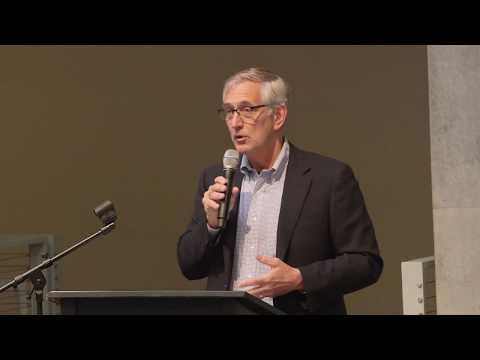 Dan Wieden & Mayor Charlie HalesWhat’s Love Got to Do With It?
 Victor StrecherThe Science of Self-Transcendence
 Freddy EhlersRedefining Happiness in Ecuador’s Government
 John WallisThe Link Between Presence & Compassion
 Judy WicksGood Morning, Beautiful Business
 Bruce Cryer & Anders FergusonWhy the Heart Matters in Business
 Mandar ApteA Fireside Chat, hosted by Ruben Cantu
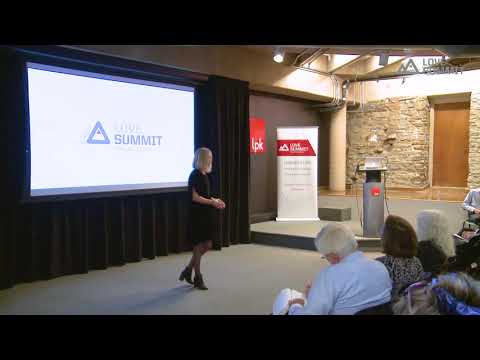 Kim HarrisonWork at Love, Love at Work
 Marci Zaroff & Eric SchnellThe Power of Love in Business
 Simon SinekA word on the Love Summit
In the press
Coverage of the Love Summit, and interviews on the thinking behind it.
The writing
Essays on love, power, and leadership appear first on the Just Choose Love Substack, where a community of readers follows the inquiry as it unfolds. The website gathers a selected few as a reading guide; the living body of the work lives there.
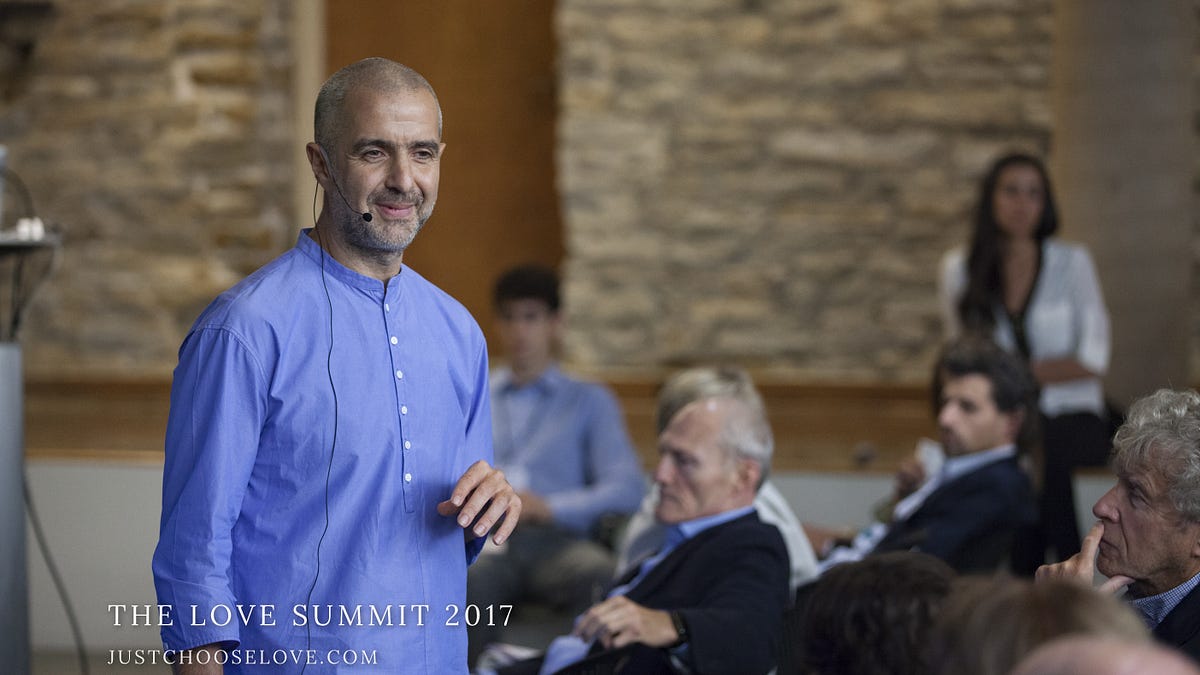
August 12, 2026
A Turkish entrepreneur believed love and power were opposites, until his doctoral thesis was sent back for leaving power out. Second in a series from the Love Summit archives.
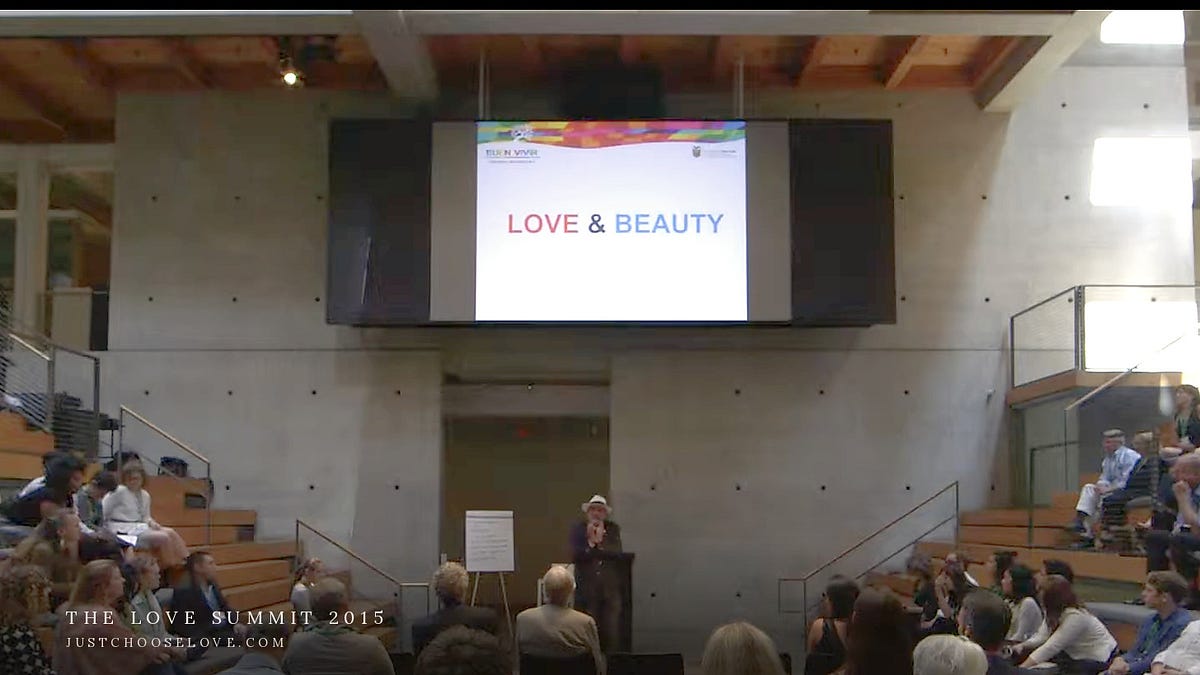
August 6, 2026
He ran a government office for the good life, then asked a room of executives to close their eyes. First in a series from the Love Summit archives.
How this began
Just Choose Love began as a question: what happens when the way we relate to people, profit, and power becomes the starting point for how we build?
At its center is the Love Summit, first convened in 2015 to bring that question to leaders working inside real systems. How we use power and define success shapes our institutions, and those institutions shape the world the rest of us live in. The inquiry runs from the personal to the institutional, because love that holds up in a boardroom begins in far more private rooms.
This has never been the work of one person. It has been shaped by the sponsors, speakers, partners, and participants who turned an idea into a living, collective inquiry, and it continues in the company of leaders committed to building institutions that strengthen people and society.
The steward
Just Choose Love was founded and is stewarded by Samantha Thomas. A leadership and executive coach, consultant, speaker, and writer with a Master of Science in Global Prosperity, she works with founders and executives on the questions this inquiry raises, and has convened the Love Summit since 2015.
To connect, or to explore advisory and consulting work, visit congruencecoaching.me or find her on LinkedIn.
An invitation
We're convening a small group of people to shape what comes next.
Leaders who want to take part in the conversations.
Organizations interested in building this alongside us.
Anyone who simply wants to follow the work as it unfolds.
If the question at the top of this page is one you've been sitting with, we'd like to hear from you.
Join the conversation
Essays on love, power, and leadership, and early word on the next Love Summit. If you'd like to take part as a speaker or partner, write to us directly.
No noise. Only the work, and the occasional invitation.